SUMMARY
This is AI generated summarization, which may have errors. For context, always refer to the full article.
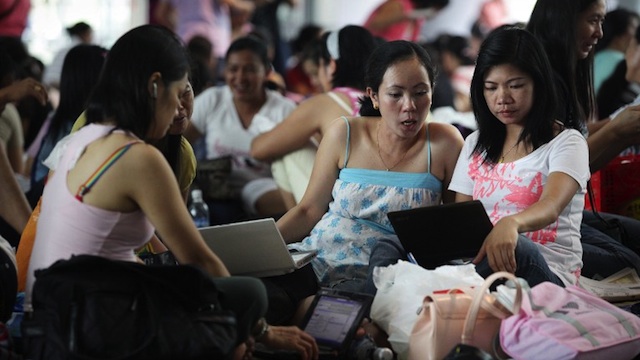
HONG KONG – About a thousand migrant domestic workers from Southeast Asia rallied in Hong Kong Sunday, December 16, to mark International Migrants Day and push for better working conditions and higher wages.
The atmosphere was festive as the protesters, mostly from Indonesia and the Philippines, sang and shouted slogans at the government headquarters, according to an AFP photographer.
The march coincided with International Migrants Day set by the United Nations General Assembly in 2000 when it adopted a resolution protecting the rights of migrant workers and family members.
“The government is trying very hard to exclude Asian migrant workers from equal benefits,” Eni Lestari from Indonesia, a spokeswoman for the rally organisers Asia Migrants Coordinating Body, told AFP.
Foreign domestic workers, who usually live with their employers, do not have standard employment hours and can work up to 20 hours a day, said Lestari, who has worked in Hong Kong for 12 years as a maid.
United Filipinos chairperson Dolores Balladares said the minimum monthly wage for foreign domestic workers had increased by just HK$60 (US$7.7) in the past 13 years to HK$3,920, far from keeping up with the rising cost of living.
Participants also protested about the issue of right of abode in the city. In March, a local court overturned a landmark ruling that opened the door for thousands of foreign maids to claim permanent residency in the southern Chinese city.
There are more than 300,000 foreign domestic helpers in Hong Kong, mainly from Indonesia and the Philippines but also from Thailand, Sri Lanka and Nepal.
Many send part of their pay back to relatives at home, providing a huge source of foreign remittances to the Philippine and Indonesian economies. – Agence France-Presse
Add a comment
How does this make you feel?
There are no comments yet. Add your comment to start the conversation.