SUMMARY
This is AI generated summarization, which may have errors. For context, always refer to the full article.
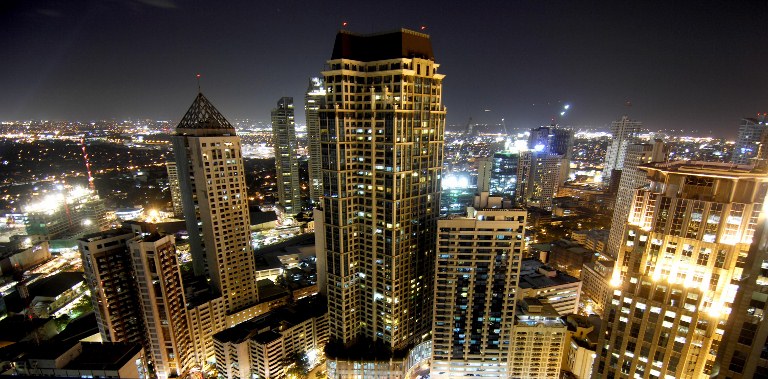
MANILA, Philippines – Only a few economies are poised to take off in the world’s new era of economic downturns, and the Philippines could be one of them.
Formerly the “sick man of Asia,” the country is expected to be a “breakout nation” in the coming decade — or one that beats expectations and does better than peers in the same income class, according to Ruchir Sharma, head of Emerging Market Equities and Global Macro at Morgan Stanley Investment Management.
In his book Breakout Nations: In Pursuit of the Next Economic Miracles, Sharma forecasts several other countries could break out during the same period, including, Czech Republic, South Korea, Turkey, Poland, Thailand, Indonesia, Sri Lanka and Nigeria.
The Philippines would have to grow 5% or faster to be a breakout, which would mean exceeding the forecasts set by government, multilateral lenders and several financial institutions.
Sharma cites several positives he believes will work in the Philippines’ favor: political stability under the Aquino administration, the wealth of mineral resources, and cities with large young workforces capable of driving growth.
He considers the Philippines’ well-educated English-speaking population as an advantage the country could capitalize on to get a leg up on its neighbors. He said the rise of the business process outsourcing industry, as a rival to India’s, was already a sign that after 3 decades of “squandering” advantages, the Philippines has turned around.
Credit to Aquino
Sharma largely credits President Benigno Aquino III with setting the stage for stronger economic growth.
He said that when he visited in early 2010 before Aquino was sworn in, “the Philippines was still the undisputed laggard of Asia, a nation mired in chronic incompetence.”
But the country “is no longer a joke” under Aquino, noted Sharma. In fact, since Aquino assumed office, the country has experienced a series of international credit ratings upgrades, the stock market has become one of the strongest performers in the world, all while inflation has stayed stable and relatively low.
Sharma sees the current economic climate as a major change from the “drift and decay” under former President Gloria Arroyo. Sharma points to the still problem-plagued Manila international airport as a prime example of “how cronyism and ineptitude has retarded economic growth.”
He balanced praise and criticism, writing that Aquino “was originally dismissed in foreign circles as an unimpressive 51-year-old bachelor who had lived most of his life with his mother and had not made much of a mark in a low-profile career as a Philippine senator.”
But he credits the man who is now the President with appointing “competent technocrats” and not letting investors hold him “hostage.” He said in one meeting, investors were pleased that a casually-dressed Aquino didn’t make “tall promises” but emphasized “his intention to keep government clean.”
“At long last, the Philippines looks poised to resume a period of strong growth. The new president, Benigno Aquino, probably has just enough support, and looks likely to generate just enough reform momentum, to get the job done,” said Sharma. – Rappler.com
Add a comment
How does this make you feel?
There are no comments yet. Add your comment to start the conversation.